I would like to express my appreciation and thankfulness to RIBA for inviting me to contribute to this important event. The concept behind this piece is to structure the ideas and works that defined the Metabolism Movement in Japan as a response of the reconstruction that followed World War II. This process has been divided in particular stages: the Event, the Iconic Building, the Symbolic Reconstruction, the Genesis of the Movement, Experimentation, Climax and Worldwide Influences.
Finally it insinuates a resemblance with a more recent tragedy that hit Japan: the 2011 Tōhoku earthquake and tsunami.
JAPANESE METABOLISM AS CATALYZER OF POST WAR RECONSTRUCTION
THE EVENT
At 8:15 in the morning of August 6th 1945 the first atomic bomb was dropped over the hustled streets of Hiroshima. Living beings and buildings alike were devastated under that gigantic blast. However, there were survivors, both humans and edifices, who managed to withstand that hellish event.

THE ICON
One of the few surviving buildings became an icon and it was preserved as a symbol of the Japanese resilience in the difficult years of the post-war reconstruction: The International Promotion Hall, worldwide known nowadays as the Atomic Dome. This building became later so important that was declared a World Heritage site by UNESCO.

SYMBOLIC RECONSTRUCTION
This symbolism is evident in Kenzo Tange’s plan for
Hiroshima’s Peace Park, built just 4 years after the end of the war. Arranged
around a linear axis pointing at the Atomic Dome and framed by monuments and a
museum raised from the ground by columns. Tange underlined a connection between
the past and the future, between a horse seat samurai monument and modern
architecture heavily influenced by Corbusian principles.


How come a defeated Japan would embrace Western Modernism to express its reconstruction? The answer perhaps was given to me by an atomic bomb survivor while I was visiting the Hiroshima Peace Park some years ago. I asked the old gentleman an impertinent question: “What do you think about the Americans now?” The unexpected answer was: “I respect them because they were the victors”.
GENESIS OF METABOLISM
15 years later Japan’s economy was growing fast along with an unprecedented urban sprawl. In 1960 Japan’s most renowned architect detached himself from Western Modernism and mentored the most important Japanese architectural movement of the 20th century: Metabolism. During the 1960 World Design Congress Kenzo Tange and a group of his young disciples –Kisho Kurokawa, Kiyonori Kikutake, Fumihiko Maki, Masatu Osaka and others- produced a manifesto called “Metabolism: Proposals for a New Urbanism”.
On January 1st 1961 Tange presented his Plan for Tokyo Bay, a visionary proposal composed by megastructures displayed along the water to host the huge urban expansion of the city. Megastructures composed by modules that would grow like in a living organism or a meccano were characteristic of Metabolism. The proposal consisted of a fleet of units up to 300 m wide, with roofs resembling Japanese temples that seemed to be floating in the water, containing residences. The proposal differed from the ideas of CIAM, which was in favor of "urban centers" and proposed "civic areas" instead. Even if Tokyo Bay was never built, it allowed Metabolists to be exposed to a much wider public.

Kenzo Tange in front of his Plan for Tokyo in 1960
EXPERIMENTATION
The Tokyo Olympics of 1962 sent a message that the agonic years of the post-war were being left behind and they were replaced by an optimistic vision of the future. The National Gymnasium designed by Tange in Yoyogi Park in Tokyo was a unique expression of modern Japanese architecture, which however reminded me in some details of the traditional shrine of Ise. This reference also evocates the idea of regeneration cycles, so present in Shito shrines and embraced by Metabolism.


Renewal of Tsukiji District. Kenzo Tange, 1963.

International Conference Centre, Kyoto. Sachio Otani, 1966.
THE CLIMAX
Besides architecture and urbanism, art was deeply involved in Metabolism, primarily through two events: the exhibition "Environmental Space", 1966, and mainly the Osaka Expo in 1970 (whose urban planning was also designed by Tange). This was a chance for artists like Katsuhiro Yamaguchi and Kiyoshi Awazu to develop creations based on the principles of Metabolism. For example, in the central square a Tower of the Sun was located, created by sculptor Taro Okamoto, which still stands today.
Besides architecture and urbanism, art was deeply involved in Metabolism, primarily through two events: the exhibition "Environmental Space", 1966, and mainly the Osaka Expo in 1970 (whose urban planning was also designed by Tange). This was a chance for artists like Katsuhiro Yamaguchi and Kiyoshi Awazu to develop creations based on the principles of Metabolism. For example, in the central square a Tower of the Sun was located, created by sculptor Taro Okamoto, which still stands today.
The Expo 70 was an outstanding occasion to show up the ideas and products of Metabolism. One of the most popular examples was the Beautilion Pavilion, by Kisho Kurokawa, 1970.Obsessed with the idea of capsules, Kurokawa organized a structural frame to which cube capsules were attached. The unfinished aesthetic conveyed the idea that it was a constantly growing project.


Beautilion Takara, Osaka Expo. Kisho Kurokawa, 1970. Obsessed with the idea of capsules, Kurokawa organized a structural frame to which cube caps were attached. The unfinished aesthetic conveyed the idea that it was a constantly growing project
This idea led to the construction of the Nakagin Capsule Tower, perhaps the most emblematic building of the Metabolist Movement. Kurokawa's project was a bit more ambitious than the one that was actually built, and consisted of two towers housing the capsules, that could be growing organically according to future needs, according to Metabolist principles. The buildings consisted of two components: a mega-structure of reinforced concrete containing the elevators, stairs as well as bridges that interconnect to other buildings, and the capsules, which would anchor the structure in just 4 points for easy replacement every 25 years.

Ironically, these events marked the decline of Metabolism, as the energy crisis of the 70’s forced to rethink the role of urban growth and cities.
INFLUENCES
Metabolism had repercussions way far beyond Japan, in places like Peru, Macedonina and United States.
Kiyonori Kikutake’s proposal for the Marine City in Hawaii, in 1963 was a series of cylindrical buildings that accommodated housing units, which were attached to a fixed core. As the units became older, they were replaced by new ones, similar to regenerating cells. This was a much earlier version of Kurokawa’s Nakagin capsule tower.
 Marine City, Hawaii. Kiyonori Kikutake, 1963. These "rollers" were cylindrical cores from which housing units were born. As the units became older, they were replaced by new ones, similar to regenerating cells.
In 1967, Peruvian President architect Fernando Belaunde, promoted experimental housing systems called PREVI, to which Metabolists were invited, along with other famous international architects. The proposal of Kiyonori Kikutake, Kisho Kurokawa and Fumihiko Maki was characterized by a long and narrow layout of the dwelling units, that regulates the rigid division between the services and living functions.
Another example is the 1967 Master Plan for Skopje, carried out by Kenzo Tange. After a strong earthquake that devastated the Macedonian capital, the UN organised a competition for an urban plan for the new city. A winner Tange envisioned a capital structured around two concepts: the "City Gate", which was the hub of entry into the capital, comprising all transportation systems, and the "City Wall", consisting of apartment buildings, simulating a medieval wall, which would incorporate housing to the downtown areas.

THE EVENT
On March 11 a huge earthquake hit Tohoku, northeastern Japan, whose intensity (9.0 on the Richter scale) was the highest in the country's history. Japan sits atop the Eurasian tectonic plate and is pushed by the Pacific plate and the Philippine plate. Every 30 years it is expected a 7 to 8 magnitude earthquake will occur in this area (Miyagi Jishin), due to the tension of the Philippine plate. What nobody expected, since it happens every 1000 years, is a 9 magnitude earthquake, resulting from the breakup of the Pacific plate (Miyagi Oki Jishin).
Because the frequency of tsunamis in this area, given the intricate coastline profile that reverberates water waves , the coast is protected by dikes and barriers up to 4 m height. However, the strength of the earthquake made the whole coast to sink up to 1 m. Besides, nobody could expect the super wave of 7 m that surpassed the concrete defenses as if they not exist at all. Moreover, large blocks of those became a moving wall of mud and debris that collided with the wooden houses that were standing on the shore.


Ironically, these events marked the decline of Metabolism, as the energy crisis of the 70’s forced to rethink the role of urban growth and cities.
INFLUENCES
Metabolism had repercussions way far beyond Japan, in places like Peru, Macedonina and United States.
Kiyonori Kikutake’s proposal for the Marine City in Hawaii, in 1963 was a series of cylindrical buildings that accommodated housing units, which were attached to a fixed core. As the units became older, they were replaced by new ones, similar to regenerating cells. This was a much earlier version of Kurokawa’s Nakagin capsule tower.
 Marine City, Hawaii. Kiyonori Kikutake, 1963. These "rollers" were cylindrical cores from which housing units were born. As the units became older, they were replaced by new ones, similar to regenerating cells.
In 1967, Peruvian President architect Fernando Belaunde, promoted experimental housing systems called PREVI, to which Metabolists were invited, along with other famous international architects. The proposal of Kiyonori Kikutake, Kisho Kurokawa and Fumihiko Maki was characterized by a long and narrow layout of the dwelling units, that regulates the rigid division between the services and living functions.
Another example is the 1967 Master Plan for Skopje, carried out by Kenzo Tange. After a strong earthquake that devastated the Macedonian capital, the UN organised a competition for an urban plan for the new city. A winner Tange envisioned a capital structured around two concepts: the "City Gate", which was the hub of entry into the capital, comprising all transportation systems, and the "City Wall", consisting of apartment buildings, simulating a medieval wall, which would incorporate housing to the downtown areas.

Plan reconstruction of Skopje, Macedonia. Kenzo Tange, 1965. This proposal won an international competition and it was structured around two concepts: the "City Gate", which was the hub of entry into the capital, comprising all transportation systems, and the "City Wall", consisting of apartment buildings, simulating a medieval wall, which would incorporate housing to downtown
THE EVENT
On March 11 a huge earthquake hit Tohoku, northeastern Japan, whose intensity (9.0 on the Richter scale) was the highest in the country's history. Japan sits atop the Eurasian tectonic plate and is pushed by the Pacific plate and the Philippine plate. Every 30 years it is expected a 7 to 8 magnitude earthquake will occur in this area (Miyagi Jishin), due to the tension of the Philippine plate. What nobody expected, since it happens every 1000 years, is a 9 magnitude earthquake, resulting from the breakup of the Pacific plate (Miyagi Oki Jishin).
Because the frequency of tsunamis in this area, given the intricate coastline profile that reverberates water waves , the coast is protected by dikes and barriers up to 4 m height. However, the strength of the earthquake made the whole coast to sink up to 1 m. Besides, nobody could expect the super wave of 7 m that surpassed the concrete defenses as if they not exist at all. Moreover, large blocks of those became a moving wall of mud and debris that collided with the wooden houses that were standing on the shore.
THE ICON
On May of the same year I was standing upon the site where once stood Minami Sanriku, a fishing village resort located in Miyagi Prefecture. As much as 95% of the village was destroyed and at least 60% of its population perished (10,000 people). The survivors lost everything.
The tragic panorama reminded me of the pictures of the atomic attack on Hiroshima. A thick haze wrapped a landscape of death and seemed to still carry the heavy load of thousands of moans, cries and tears of so many people, making us breath the scent of the tragedy.
One of the surviving structures was Disaster Prevention Center, although only its steel frame could be seen. After experiencing an earthquake for five long minutes, Miki Endo, a worker Disaster Welfare Service received a tsunami alert and began to broadcast alarm messages to the population. Many people looked for safe places, like the roofs of the few tall buildings in town. 40 minutes later, a big wave came to town, dragging everything in its path, and becoming a deadly wall of debris, cars and boats that reached a speed of 100 km per hour. The public servant heroically continued broadcasting without trying to seek refuge, managed to save many lives, until she was engulfed by water.
The building became a symbol of her heroism and Japanese resilience facing catastrophic events.

WHAT IS COMING?
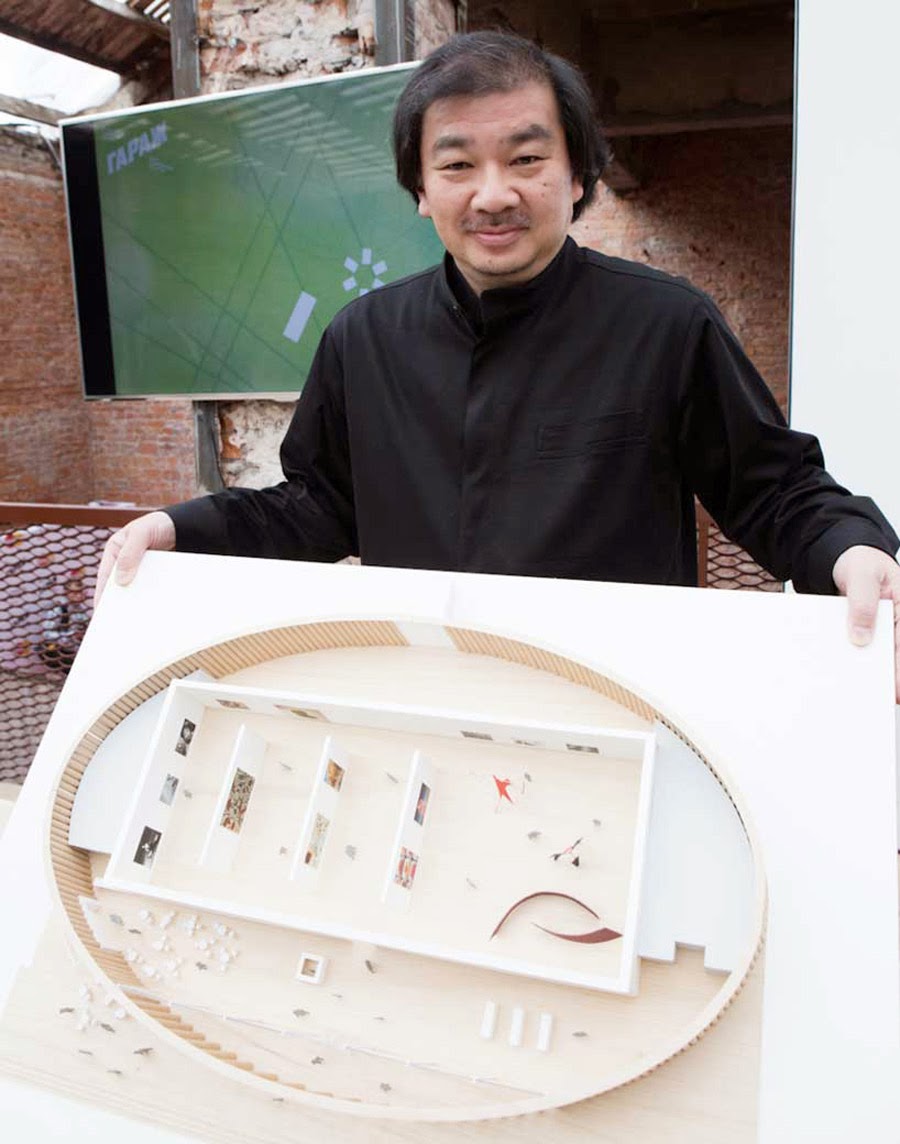
The huge scale of this disaster mobilized the whole country and a plethora of architectural proposals were developed throughout Japan. To the widely discussed ideas of Japanese masters and Pritzker awardees Toyo Ito and Shigeru Ban, many other ideas had been discussed in academic circles.
Perhaps, like in the past, this is a new chance for the development of new urban and architectural ideas and theories.

The tragic panorama reminded me of the pictures of the atomic attack on Hiroshima. A thick haze wrapped a landscape of death and seemed to still carry the heavy load of thousands of moans, cries and tears of so many people, making us breath the scent of the tragedy.
One of the surviving structures was Disaster Prevention Center, although only its steel frame could be seen. After experiencing an earthquake for five long minutes, Miki Endo, a worker Disaster Welfare Service received a tsunami alert and began to broadcast alarm messages to the population. Many people looked for safe places, like the roofs of the few tall buildings in town. 40 minutes later, a big wave came to town, dragging everything in its path, and becoming a deadly wall of debris, cars and boats that reached a speed of 100 km per hour. The public servant heroically continued broadcasting without trying to seek refuge, managed to save many lives, until she was engulfed by water.
The building became a symbol of her heroism and Japanese resilience facing catastrophic events.

WHAT IS COMING?
The huge scale of this disaster mobilized the whole country and a plethora of architectural proposals were developed throughout Japan. To the widely discussed ideas of Japanese masters and Pritzker awardees Toyo Ito and Shigeru Ban, many other ideas had been discussed in academic circles.
Perhaps, like in the past, this is a new chance for the development of new urban and architectural ideas and theories.
Toyo Ito presenting its ideas on House for All during the UIA World Congress of Architecture, Durban, South Africa.
SEE ALSO
- Kenzo Tange WORKS
- Kisho Kurokawa WORKS

- Kenzo Tange WORKS
- Kisho Kurokawa WORKS
* SPECIAL FEATURES
- A devastating tsunami hits Tohoku, in northern Japan (Mar 11, 2011)
- Expo Shanghai 2010: Intensive Gazes (International Photo Exhibition)

Thank you very much to Charlotte Broadribb and Michelle Alderton from RIBA for inviting me to participate in this event and for sharing this screen grab. I hope some day I can replace it with a picture of us together.